

The NZ tech hiring landscape has shifted considerably over the past couple of years, and it hasn’t been easy for anyone in the sector. Employers are navigating leaner budgets, candidates have faced a tougher search than many anticipated, and the market has moved in ways that have caught both sides off guard.
But while the landscape has changed, the fundamentals of a good hiring process haven’t. How you treat people during an interview still says more about your organisation than almost anything else. That reputation sticks, in both good markets and challenging ones.
The Candidate Is Interviewing You Too
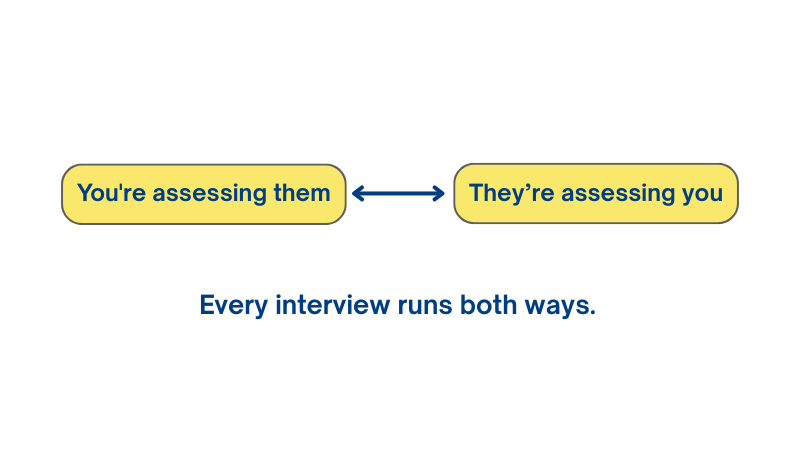
It’s worth starting with the most important mindset shift: your candidates are evaluating you just as carefully as you’re evaluating them.
The competition for top IT talent in New Zealand isn’t just playing out between local tech employers. You’re up against opportunities across New Zealand, across the Tasman, and further afield, and plenty skilled candidates know it. They’re making decisions based on how they’re treated from the very first interaction, long before an offer is on the table.
That means every interview has a dual purpose. Yes, you’re assessing a team and skills fit. But you’re also making a case for your organisation, your culture, and the opportunity in front of them. Walking in prepared to do both is what separates employers who consistently land the people they want from those who keep wondering why strong candidates dropped out of the process.
First Impressions: Set the Right Tone from the Start
Too many interviews begin with an abrupt dive into technical questions or a rapid-fire competency assessment. It creates a cold, transactional atmosphere that rarely brings out the best in candidates, and rarely reflects well on the business running the process.
The interviews that work best start differently. Acknowledge that interviews are nerve-wracking. Show some personality. Share something real about your team or the role before you start asking anything of the candidate. When people feel at ease, you get a far more accurate picture of who they are and how they think, which is, after all, the whole point.
The best interviews feel like a conversation between two professionals exploring a mutual opportunity, because that is exactly what they are.
Beyond the Job Description: What NZ Tech Candidates Are Really Weighing Up
Today’s tech professionals aren’t just evaluating salary and job title. Data from our 2025 IT Industry Survey points to a persistent disconnect between what employers tend to offer and what employees actually care about, and for two years running, that gap hasn’t moved. View the full infographic here.
| What candidates want most | What many employers lead with |
|---|---|
| Extra annual leave | Hybrid models (1-2 days WFH) |
| Remote or flexible work options | EAP programmes |
| Meaningful professional development | Standard benefits packages |
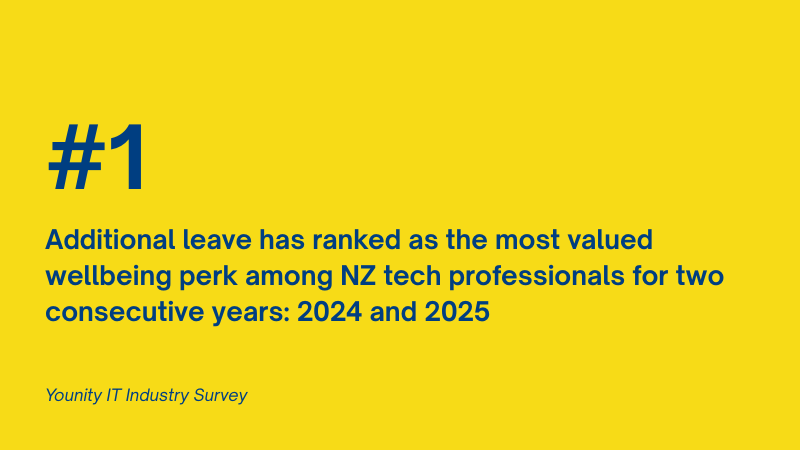
Additional leave has ranked as the number one wellbeing perk for two consecutive years, in both our 2024 and 2025 IT Industry Survey results. Having enough time to rest and recharge matters to people, and to how they feel about the employer who made it possible. An extra day for birthdays, a wellness day, or a formal Christmas shutdown can shift how candidates perceive you, and what that looks like will depend on the size and structure of your business.
On flexibility, what would make a difference is being specific. Candidates want to know what a normal week actually looks like, and whether what’s described in the interview holds once they’re in the role. Be upfront about how your team operates. The right people will lean in; those who aren’t a fit will self-select out.
Professional development is the one area where employer offerings and candidate priorities actually align. Our 2025 IT Industry Survey shows it ranks in the top three on both sides, but the gap isn’t about whether it’s offered. It’s about whether it feels real. What would make a difference to most candidates is a clear answer to: where could this role take me in two or three years?
If your EVP isn’t addressing these things, the interview is where you find out. Come prepared to discuss development pathways, what flexibility looks like day-to-day, and the culture and team dynamic that often determine whether someone thrives. And if candidates raise things you don’t currently offer, be honest. What tends to damage trust, and your reputation in a small market, is being told something in an interview that doesn’t match the reality of the role.
Speed Matters: Don’t Lose Strong Candidates to a Slow Hiring Process
In a candidate-short market for specialist tech skills, a slow process is rarely a neutral thing. Strong tech professionals aren’t sitting idle waiting for a callback. They’re being approached by other employers, progressing through other processes, and making decisions. Drawn-out timelines, unclear next steps, and delayed feedback don’t just frustrate candidates; they hand them to someone else.
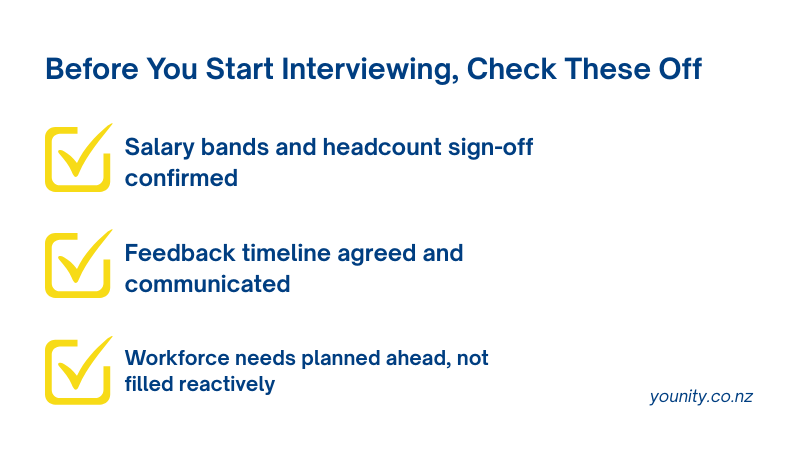
A few things that make a real difference here:
- Getting all internal approvals in place before you start interviewing, including salary bands, headcount sign-off, and a clear view of what the role requires, removes the delays that tend to derail good processes at the final stage
- Committing to a feedback timeline and sticking to it. Even a brief update that says “we’re still working through the process” signals that you respect people’s time
- Planning workforce needs ahead of time (rather than hiring reactively), almost always results in better outcomes and lower costs than scrambling to fill an urgent gap
Be Realistic About What the New Zealand Tech Market Can Offer
New Zealand’s tech talent pool is finite. For established technologies, experienced candidates exist, but they’re likely employed, selective, and not actively looking. For emerging technologies, deep experience is rare by definition, because the whole market is still building it.
The best hire for a role in a new technology space is often someone with strong adjacent skills, a track record of picking things up quickly, and the kind of growth mindset that will serve the organisation well as the technology evolves. Holding out for someone who ticks every box on a wish list is a strategy that tends to result in a long vacancy rather than a perfect hire.
Salary expectations also need to reflect where the NZ tech market actually sits. Offering below-market compensation while expecting above-market skills isn’t a negotiating position. It’s a signal to candidates about how the organisation values the people it’s trying to attract.
The Things That Protect Your Reputation in a Small Market
Professional standards in hiring come down to something straightforward: treating people with respect. In a market as connected as New Zealand’s tech community, how you treat candidates travels further than you might expect, and it shapes how your organisation is perceived long after the role is filled.
Confidentiality sits at the heart of this. Many of your strongest candidates will be currently employed, and they’ve trusted you and your recruiter with information they haven’t shared with their employer. Handling that with genuine discretion isn’t a courtesy extended to candidates. It’s a baseline expectation of any professional hiring process, and falling short of it has a way of getting around.
It’s also worth being clear on what you can and can’t ask in an interview, because some questions that feel routine carry legal implications that aren’t always obvious. Your recruiter can help you navigate this, as they’re across the employment law considerations and can make sure your process stays on the right side of them without you having to become an expert yourself.
Reference checks deserve the same level of care. When a candidate is keeping their search private, being asked to provide references from their current employer puts them in an impossible position, and it’s a request that can do real damage to a relationship you’re still trying to build. There are effective ways to conduct thorough due diligence that don’t require candidates to put their current role at risk, and working with your recruiter to understand what those look like is well worth the conversation.
The Bottom Line: Great Hiring Reflects Great Leadership
Your interview process sends a signal to NZ techs about what it’s like to work for you. A process that feels rushed, disorganised, or impersonal tells candidates, and through them the broader tech community, something about your culture and how your organisation values people.
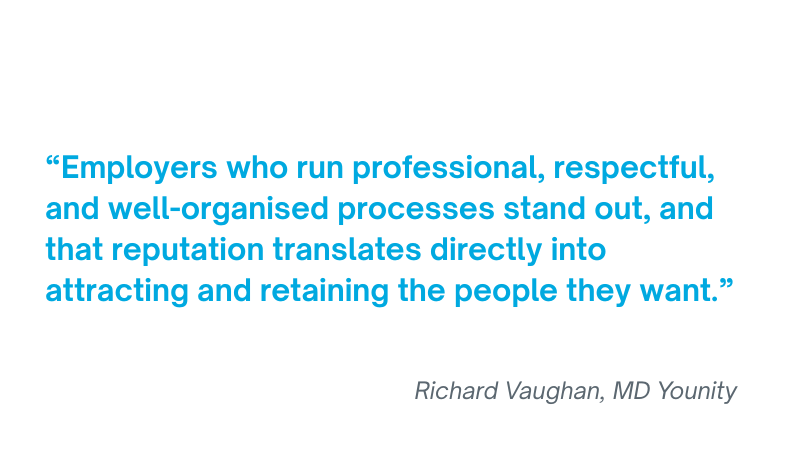
The encouraging reality is that the bar isn’t as high as it should be. Employers who run professional, respectful, and well-organised processes stand out, and that reputation translates directly into attracting and retaining the people they want.
At Younity, we work with employers and candidates across the New Zealand technology sector every day, and that puts us in a position to hear both sides of the conversation. We know what candidates are saying after interviews, what makes them accept an offer, and what makes them walk away. If you’d like a frank conversation about how your current approach is landing in the market, we’d be glad to have it. Get in touch with our team.
Our NZ IT Industry Temperature Check Survey explores sentiment among NZ tech professionals – view the full infographic here.