

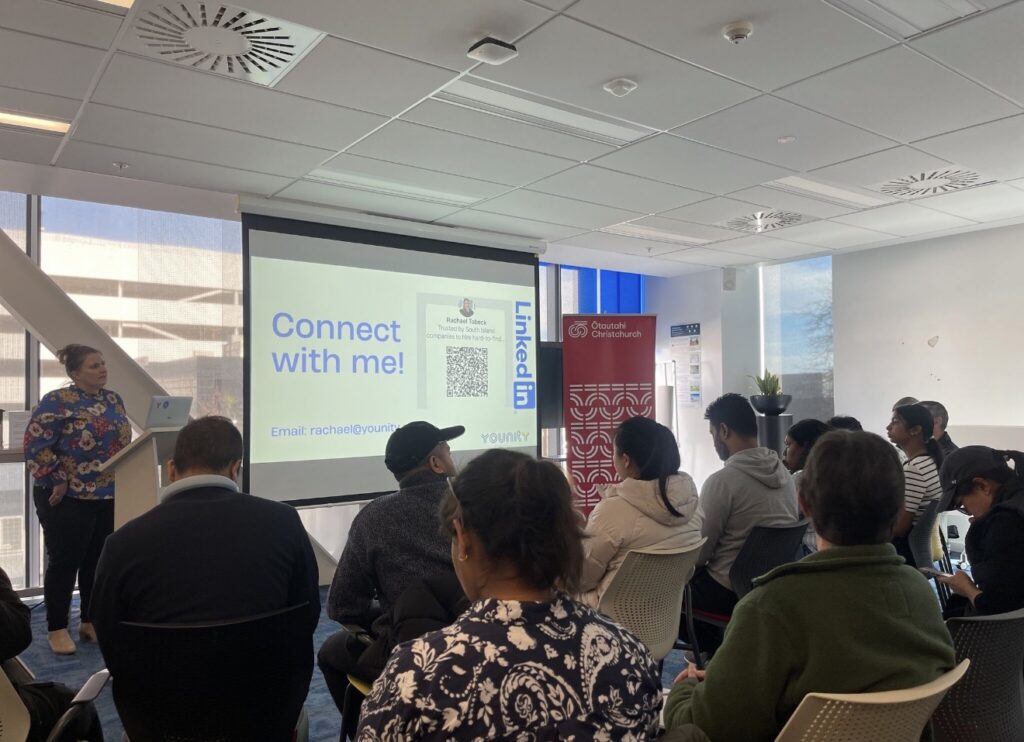
During NZ TechWeek 2026, I sat down with someone who had over a decade of solid experience and couldn’t get a callback. They weren’t doing anything wrong, exactly. They just didn’t have the right information.
That story repeated itself more times than it should have over the course of our Canterbury event. Skilled migrants navigating New Zealand’s tech sector for the first time. Capable, motivated people who were ready to contribute but missing the guidance they needed to move forward with confidence.
Many of the questions they asked could have been easily answered with the right support. Here’s what we talked through.
Life happens. Your CV should reflect that.
One of the most common questions I heard was: “How do I explain a career gap on my CV?”
People had stepped away from work for completely valid reasons, raising children, caring for family, or focusing on their own health. And yet many felt anxious about how this would be perceived.
The good news is that it doesn’t need to be complicated. A simple, honest approach works:
- Label it clearly as “Career Break” with start and end dates
- Add one short line explaining the reason, such as family care or personal development
- Include anything relevant from that time, like study, volunteering, or freelance work
Employers understand that life isn’t always linear. What creates uncertainty is an unexplained gap. A clear and honest explanation builds trust and removes doubt.
Are you stuck in reactive job searching?
Another pattern that came up often was how people approach job hunting. When you need a job, it is easy to turn to Seek, apply for everything that looks close enough, and then wait.
It can feel frustrating when nothing comes back.
The challenge is that many others are doing exactly the same thing, often with generic applications that do not stand out.
What many job seekers do not realise is that a large portion of roles are shared and filled through networks before they ever reach a job board. In my own work, more than half of the roles I recruit for are never advertised on Seek. They are filled through conversations, referrals, and existing connections.
The people who secure these roles are not necessarily the fastest applicants. They are the ones who take the time to reach out, ask thoughtful questions, and build relationships early.
Being proactive is not about doing more applications. It is about being visible and staying connected, so opportunities can find you too.
Context makes a big difference on your CV
This is especially important if you have worked overseas.
You might list a company that is well known in your home country, but unfamiliar to someone in New Zealand. A little bit of context can make a big difference.
For example, instead of just listing the company name, you could briefly describe it. Mention the industry, the scale, or the type of work you were involved in. This helps someone quickly understand your experience without needing to look it up.
The same applies to skills. If a role asks for something you are still building, take small steps to show progress. A short course, a certification, or even a personal project can demonstrate initiative and willingness to learn. Those things matter.
Get on LinkedIn
One thing that genuinely surprised me at TechWeek was how many people were not using LinkedIn. Some were relying entirely on job boards.
That means missing out on a large part of the job market.
Many opportunities come through networks and direct conversations. LinkedIn is often where those connections begin. Without it, you are much harder to find.
If you are not sure where to start:
- Create a complete profile with a clear, professional photo
- Connect with recruiters and people in your industry
- Follow companies you are interested in
- Engage with posts and discussions
- Attend events, even if networking feels outside your comfort zone
- Start small conversations
You do not need to do everything at once. Even a few small steps can make a difference.
Keep it simple and keep moving
The job search process can feel overwhelming, but the fundamentals are straightforward. Be honest about career breaks. Build connections rather than just sending applications. Give your overseas experience the context it deserves. Close skill gaps where you can. And show up on LinkedIn, even in small ways.
The people who move forward aren’t always the most qualified. They’re the ones who stay visible, keep the conversations going, and don’t give up when things go quiet.
And one more important reminder. If you’ve gone through interviews and then stopped hearing back, that isn’t a reflection of your value. It happens more often than it should. Try not to let it shake your confidence.
You’re more capable than you think. Sometimes, the right information is all it takes to unlock the next step.
Rachael Tobeck is a tech recruiter at Younity’s Christchurch office, specialising in connecting IT professionals with opportunities across the South Island. Reach out to Rachael and the Younity team to discuss your next career move.